
The Art House is supporting Wakefield Council to invite contemporary artists to apply for a new funded residency exploring the stories, lives and histories held within and around Wakefield’s Civic Art Collection.
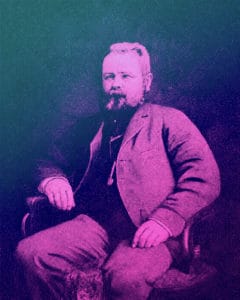
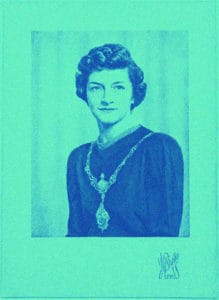
Wakefield’s Civic Art Collection brings together portraits and artworks depicting people who have played a part in the civic life and history of Wakefield and its surrounding towns. Many were created to commemorate mayors, councillors and other prominent local figures, offering a fascinating, but inevitably partial, record of the people Wakefield has chosen to commemorate.
While the formal portrait can show us a face, it cannot tell the viewer much about a life. The people in the frames are connected to the district’s civic, political, industrial and social history, but delving into Wakefield’s archives and collection reveals more interesting stories.
We are seeking proposals from artists for a one-month supported residency in Wakefield, using one or more of these portraits as a starting point for exploration and to respond in a creative response.
Emerging Stories
There is Eli Townend, born into a working-class family with a serious visual impairment, who became a business owner and spent more than forty years campaigning for working-class people. His portrait notably makes his disability visible, opening questions about disability, representation and how we choose to remember people.
There is Francis Lumb Fothergill, who began work in a brickyard aged six and went on to become an ironworker, rag merchant, manufacturer, councillor and three-time Mayor of Ossett. His life encompassed devastating family tragedy and financial collapse. In his seventies, he lied about his age to enlist during the First World War and served with the Royal Engineers in France.
Elizabeth Ellison was a schoolmistress whose husband was killed after falling from scaffolding while helping to build Wakefield Town Hall. Widowed with four children, she supported her family through work as a teacher, milliner and dressmaker. Her portrait survives in the Civic Art Collection, but no one currently knows why or how it came to be there.
George Harrison, Wakefield’s first Mayor, was also a radical activist and an active supporter of Wakefield’s anti-slavery movement, serving as treasurer of the Wakefield Anti-Slavery Association. Wakefield was an active centre of anti-slavery campaigning in the mid-1800s, with local campaigners organising public meetings and bringing prominent Black abolitionists to the city, including Frederick Douglass in 1847 and William Howard Day in 1860. This opens up much wider stories of activism, race, slavery and Wakefield’s connections to global history.
And Winnifred Ashton, an NHS radiographer, trade union member and councillor, became Mayoress in 1946 alongside Wakefield’s second female Mayor – two women occupying the Mayor and Mayoress roles together in 1946 was highly unusual.
Her surviving scrapbook provides a personal record of that year, including the opening of two experimental post-war houses in the city, intended to demonstrate how good design could improve everyday life. The furnished houses were sponsored by the Council of Industrial Design (now Design Council) in collaboration with The Arts Council, with their interiors overseen by textile artist and Arts Council worker Theo Moorman. Although the houses no longer survive, their story opens up fascinating questions about the role of art and design in shaping homes, post-war textiles and communities.
The Residency
These are just some of the stories that have begun to emerge from research into the sitters in this collection.
We are looking for an artist who is excited by the possibility of looking beyond the paintings. The residency offers time and space for an artist to delve deeper, spend time with the collection, follow threads through archives and research, encounter gaps and contradictions, and explore the lives and histories that sit beyond these formal images.
We would like you to use the portrait/s as the beginning of the research. At the heart of the residency are questions about people, place, representation and memory.You might become fascinated by something seemingly incidental: an occupation, an object, an event, a political movement, an unanswered question or something missing from the historical record altogether. You might ask who was considered worthy of being portrayed, who wasn’t, and how those decisions shape the history we inherit. Or your research might take you somewhere we haven’t yet imagined.
A support package includes £3,000 for fees, materials and travel. Accommodation, studio and free access to our Maker Spaces are also included.
The successful artist(s) will not be required to produce an exhibition or finished body of work. However, we would like the residency to result in a creative response that can be shared at the end of the project. We are deliberately open about what form this might take.
Who We’re Looking For
We welcome applications from contemporary artists working in any medium or across disciplines.
This could include sculpture, installation, moving image, sound, photography, performance, socially engaged practice, textiles, print, digital practice, writing, painting or approaches that move between forms.
You do not need to be a historian or have previous experience of working with museum collections.We are more interested in how you think as an artist: your curiosity, the questions you ask, the connections you make and how research might feed into your practice.
We particularly welcome artists who are excited by archives, overlooked histories, personal stories, material culture, social history or the relationship between past and present.
We want to give a contemporary artist the time to look again at a seemingly traditional civic collection and see where it takes them.
What’s provided
- £3,000 residency budget: with a suggested allocation of £1,500 artist fee, £1,500 materials and travel. We are open to discussing how this budget is allocated according to the needs of the artist and their proposed activity.
- Support from Wakefield Council’s Heritage Development Manager and supported access to Museum collection and archives, providing opportunities for research and exploration as part of the residency.
- Free studio space and accommodation at The Art House for the duration of the residency.
- Technician support and access to The Art House’s Print Studio, Ceramic Studio and Darkroom, where relevant to the artist’s practice and proposed work.
- Curatorial and practical support from The Art House Programme team throughout the residency.
Facilities and Making Opportunities
The Art House offers exceptional facilities that can support a wide range of craft and design practices, including:
Print Studio – Printmaking processes, papermaking, bookbinding, and more
Ceramics Studio – suitable for pottery and ceramic-based practices
Darkroom – for exploring analogue photographic processes
Application Process
The residency invites an expression of interest (EOI) application process. We want the application to be straightforward and accessible, rather than asking artists to develop a detailed proposal before they have had the opportunity to explore.
The is no standard process for the EOI but perhaps tell us about you, your practice and what you might be interested in exploring through the residency. We’re interested in your initial ideas, your curiosity about the collection and how this opportunity might connect with your practice.
You can make your application using text, video, or audio. To keep the process simple, we suggest no more than one page of A4 text / or 4 minutes of video/audio. Of course, you can provide more if you prefer, but there is no need to offer more than what is suggested. Please include links to your socials/website.
The selected artist will engage in an initial online conversation with TAH Programme Team and Wakefield Councils Heritage Development Manager to explore their aspirations for this residency, and what other support may be needed and available. We are very happy to discuss flexibility if any aspect of the offer needs adapting to suit your needs.
The deadline to apply is Thursday 22 October at 11:00AM. Please send your expression of interest to residencies@the-arthouse.org.uk
Useful Links
https://museumsandcastles.wakefield.gov.uk/discover/collections/people/civic-art/wakefield/
https://museumsandcastles.wakefield.gov.uk/discover/collections/people/civic-art/ossett/
Key Information
- When is it open? The call-out for this opportunity is open until Thursday 22 October at 11:00AM.
- When: The residency must take place before February 2027, we will work with the artist to find suitable dates.
- Who it’s for: Artists or designers living and working in the UK, with an interest in exploring Wakefield’s Civic Art Collection.
- Discipline: Open to artists and designers working in any medium.
- What’s provided: Support budget: £3,000 (suggested £1,500 artist fee, £1,500 materials and travel) and studio space and accommodation at The Art House.
The residency is supported by Wakefield Council with funding from The National Lottery Heritage Fund as part of the Our Heritage, Our Stories programme.
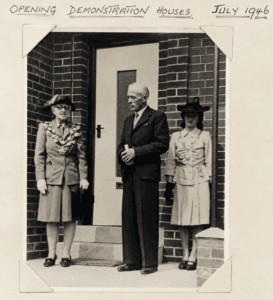
Mayoress Ashton (right) at the opening of demonstration houses in Wakefield in 1946 (image courtesy of Wakefield Libraries)